Building a Scientific Community: UCSD’s School of Physical Science’s Cohort Program
WRITTEN BY ALYSSA PICKAR
ILLUSTRATED BY JAMIE YAN
At a university the size of UC San Diego, it’s easy to feel like a number. For many lower-division classes, students are in lecture halls that seat hundreds, moving between classes with hundreds of their peers, yet still experiencing college in isolation. The School of Physical Sciences’ Cohort Program was built in response to that gap. Led by Professor Stallings of the Department of Biochemistry and Molecular Biophysics, the program seeks to lower the barriers that prevent talented students from thriving in science. Its central premise is simple, yet transformative: no student should have to navigate the journey through STEM alone.
Dr. Stallings joined UC San Diego as an Associate Professor in early 2020 and has helped run the program since then. His approach is influenced by his early work with the Open Chemistry Collaborative in Diversity Equity (OXIDE) program. At OXIDE, he examined the roadblocks that prevent students, especially first- and second-generation college students. He found that these students often arrived without inherited knowledge on how to navigate academic success, secure research opportunities, or access professional networks from entering and succeeding in science careers. He made note that, “these obstacles appear at every stage, from gaining research experience as an undergraduate to applying to graduate school, finding industry positions, and even building confidence in one’s scientific identity.” Rather than addressing only one point in this pipeline, the Cohort Program targets each step of this process systematically. It asks not only what prevents success, but how institutions can actively cultivate it.
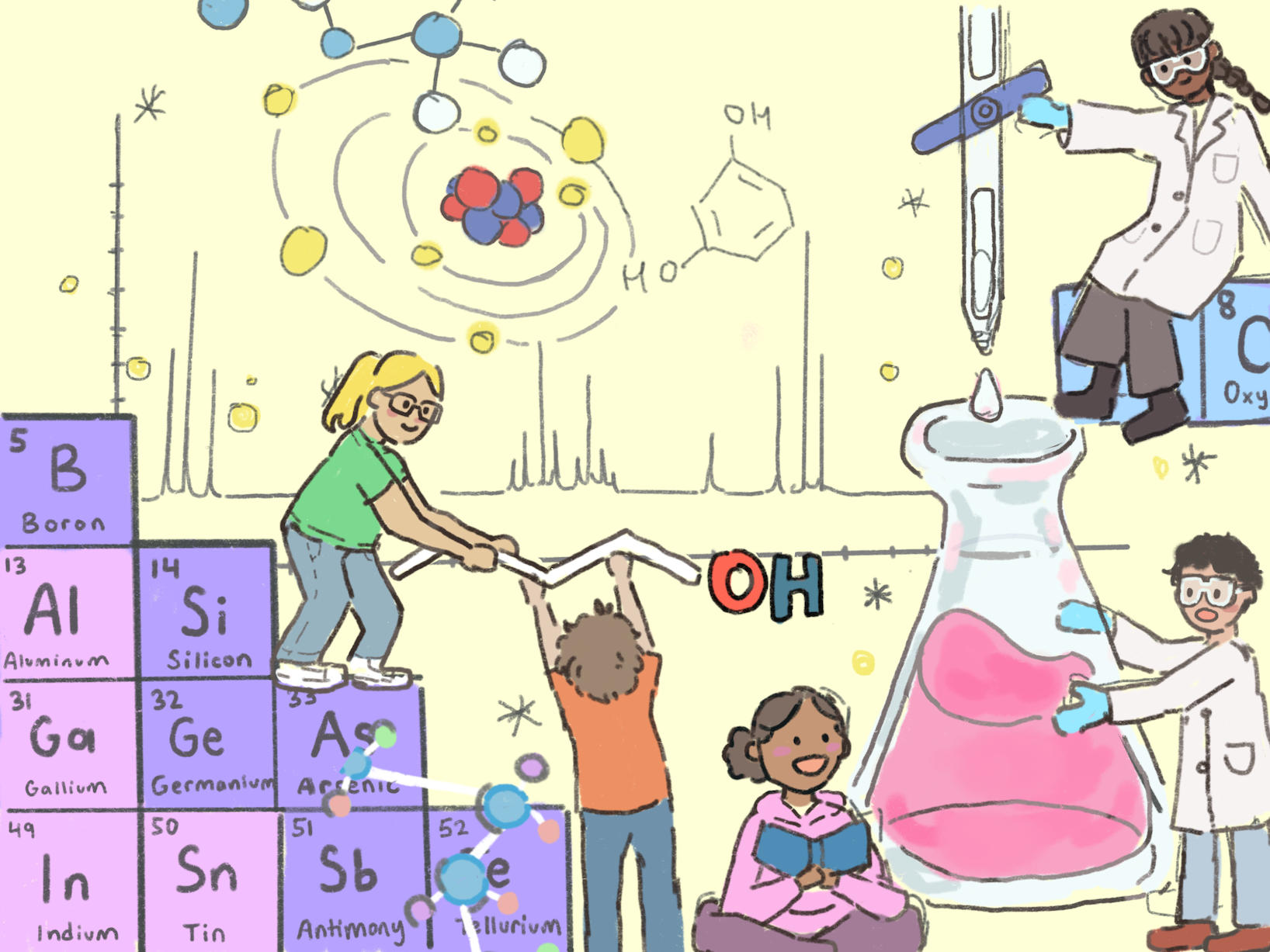
At its core, the program creates a shared academic experience. One of the major benefits of the program is that students are able to take their foundational math, chemistry, and physics classes together, allowing them to form academic and social bonds early. In lecture halls of hundreds of students, this connection can often feel rare. The Cohort Program changes that by design, by creating a built-in community where students can study and succeed side-by-side. These bonds are further strengthened through weekly meetings and mentor programs, spanning the course of students’ entire undergraduate career. Graduate students are often able to mentor undergraduates, and older cohort students guide newer members in what Dr. Stallings calls a “vertical pipeline to pull people up.”
The results of the program speak to the power of community. Dr. Stallings notes that the percentage of students in the program who engage in research is significantly higher than the campus average. The program’s upcoming graduate cohort exceeds 30 students, a reflection of both growth and retention. But the most meaningful outcome may be less quantifiable. The program, as Stallings puts it, “breeds success” by building individuals who win as a function of their uniqueness. Rather than asking students to conform to a narrow blueprint of what success looks like, the cohort encourages them to incorporate who they are into who they want to become.
Behind the number of students in research labs or other internship opportunities is the way the program reshapes how students see themselves in science. This emphasis on identity is particularly important in STEM. Many students arrive believing that scientific excellence follows a single mold. Those who lack that background may feel out of place, even when they are academically capable. The Cohort Program works to dismantle that narrative. It recognizes that students who have not been taught how to open doors and leverage opportunities may need explicit guidance, not because they lack ability, but because they lack exposure. By normalizing mentorship, offering structured pathways into research, and building peer connections, the program reframes success as something cultivated collectively.
Despite the demonstrated success, the program has not been without challenges. Recent budget cuts eliminated roughly $50,000 in annual support, which previously covered administrative coordination and graduate student mentorship stipends. A dedicated staff member who handled departmental coordination and logistical management was lost, leaving Professor Stallings to shoulder much of the responsibility alone. This year, the program received only a fraction of its former funding and no administrative support.
Rather than dissolve, the community adapted. Dr. Stallings pointed out how students stepped up to expand peer mentoring. Attendance at meetings increased, and students involved with the program often recruit friends and classmates, with nearly 40% of students joining because a peer invited them. In many ways, the program’s resilience underscored its strength and how it was never solely about funding, but about people invested in one another’s growth. Still, the strain is real. Sustained institutional support would allow the program not just to survive, but to expand its reach.
Looking forward, Dr. Stalling’s vision for the program is ambitious. He envisions a program that grows each year incrementally, but with intention. What if first-generation chemistry or biology majors automatically took introductory courses together, forming micro-communities from day one? What if participation in structured mentorship were the norm rather than the exception? The monetary resources and infrastructure for such expansion exists. What remains uncertain is whether institutional support will follow.
The broader question extends beyond one program. Universities often measure success by graduation rates or time-to-degree, but these metrics fail to capture the full picture. A four-year degree and a checked box do not guarantee professional success or personal fulfillment. Institutions are, as Dr. Stallings notes, in the business of setting up the next generation for professional success. They often pride themselves on the prominence of their alumni and public figures who carry the university name. That mission requires recognizing that students begin from different starting lines. Those with fewer roadblocks often intuitively understand how to navigate systems of opportunity. Those without that background deserve structures that make those pathways visible and accessible.
Dr. Stallings emphasized that building a scientific community is not simply about increasing research output or boosting enrollment numbers. It’s about fostering belonging. It is about ensuring that students who do not fit a traditional blueprint of success are not excluded from its outcomes. It is about creating environments where students learn together, mentor one another, and develop the confidence to claim their place in science. The Cohort Program demonstrates that such transformation does not require massive infrastructure. Sometimes it begins with a weekly meeting, a shared class schedule, or an invitation from a peer. It grows through consistent mentorship, shared ambition, and the belief that excellence and diversity are not competing values, but complementary strengths.
In a university of thousands, the community can feel elusive. But when students gather with intention—supporting one another’s growth and celebrating one another’s success—science becomes more than coursework. It becomes a shared endeavor. And in that shared endeavor, students do more than earn degrees. They build futures together.