
Using Computational Tools to Treat Tuberculosis
WRITTEN BY PRAHARSHITHA THUMATI
ILLUSTRATED BY DIANA FENG
Abstract
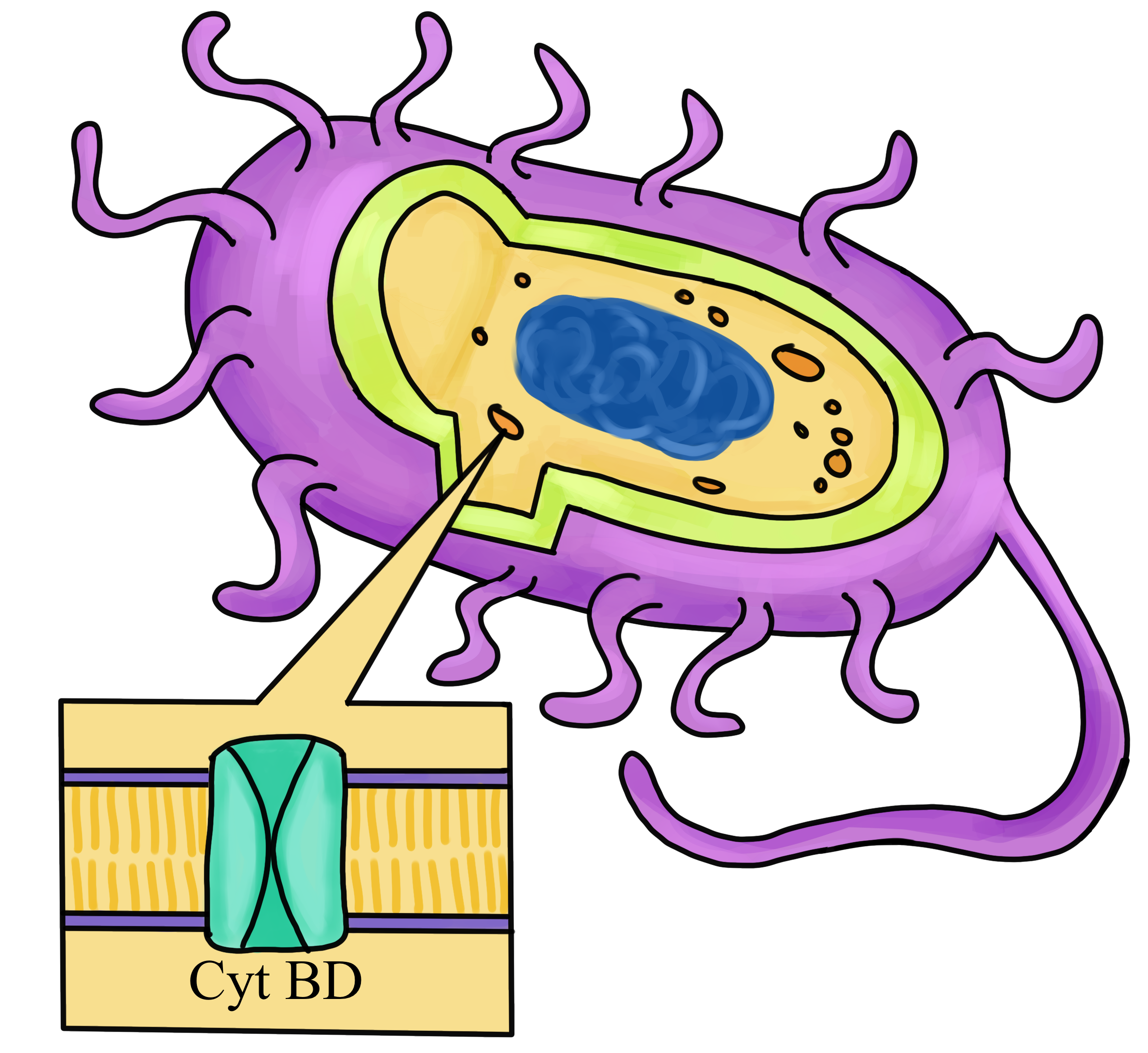
Mycobacterium tuberculosis (Mtb), the bacterium that causes tuberculosis (TB), is estimated to affect a quarter of the world’s population and kills more than a million people per year¹. Current treatments for TB are very costly, and require multiple drugs to be taken for months². Given the prevalence of this disease, there is a need to develop a more optimal cure. Computational tools, like Molecular Dynamics (MD) simulations and in silico docking, can help address this gap by optimizing already existing drugs. This enables more efficient and faster development of treatments. Cytochrome bd, an oxidase found in the electron transport chain (ETC) of Mtb, served as the drug target in this project. Previous research on this project discovered three drug candidates that inhibit the function of cytochrome bd, effectively killing the bacteria³. MD simulations were performed on variations of these drug candidates, and the most promising compounds were evaluated for experimental testing by collaborators. Out of the 30 compounds tested in vitro, 6 of them were effectively bacteriostatic.
Introduction
TB remains a leading cause of mortality worldwide, and current treatments are prolonged and require a minimum of four drugs taken daily for at least 119 days—often up to 182 days². Targeting cytochrome bd, an essential component of the Mtb ETC, presents a promising strategy to combat TB. The primary goal of this project was to assess the binding potential and stability of newly identified cytochrome bd inhibitors through an MD simulation workflow. Successful inhibition of this enzyme could shorten treatment duration and improve patient outcomes. Computational drug discovery accelerates early-stage development by reducing experimental costs and enabling precise molecular modifications prior to in vitro validation⁴. By refining these drug candidates computationally, this research aimed to enhance inhibitor efficacy, accelerate the experimental drug discovery pipeline, and contribute to the development of more effective TB treatments.
Background
Previous research identified three promising drug candidates that inhibit cytochrome bd, and the work was continued under the guidance of Dr. Haixin Wei and Prof. Andrew McCammon³. These compounds were experimentally tested by collaborators and demonstrated positive results: the ligands decreased the Oxygen Consumption Rate (OCR) of Mycobacterium tuberculosis below 50% of baseline levels, resulting in bacterial cell death³. These ligands were initially identified through molecular docking, a computational technique that can be used to predict small molecule interactions with a protein. Compared to traditional wet lab methods, molecular docking allows fast testing of a large number of potential ligands against a target protein, and it can show the exact interaction strengths and weaknesses.
Building upon this work, a new batch of potential drug candidates was evaluated based on recommendations from the experimental team. These compounds were analyzed using MD simulations, fragment-based hit testing, and molecular docking to evaluate their binding stability and dynamic interactions with the protein target.
Methods
To evaluate the potential of cytochrome bd inhibitors as TB drug candidates, molecular dynamics (MD) simulations were used. MD simulations are computer-based methods that model how atoms in a protein and a drug move over time, allowing observations of how stable a drug is when bound to its target, how the protein structure changes, and how strong the interaction is.
These simulations were performed using the AMBER software suite at the San Diego Supercomputer Center. The system, including the protein, surrounding membrane, and solvent, was built using CHARMM-GUI, a tool that helps prepare realistic biological environments. The interactions between atoms were described using AMBER force fields, which are mathematical models that approximate physical forces⁹.
The workflow began with system preparation, where the Mtb cytochrome bd structure was obtained, ligands were prepared, and the entire system was solvated and assembled using CHARMM-GUI¹⁰. Energy minimization was then performed to remove any unrealistic atomic clashes. Next, the system was equilibrated under conditions that mimic physiological temperature and pressure before running production simulations of 100 nanoseconds to observe realistic molecular behavior over time.
After the simulations, data analysis was carried out using CPPTRAJ, specifically applying a K-means clustering algorithm. This method groups similar molecular structures together to identify the most representative binding conformations of the ligand. These representative structures were then used for further molecular docking analysis, which predicts how well a ligand fits into the protein binding site.
Additionally, fragment-based modifications were explored using Schrödinger Glide, which can virtually “attach” small chemical fragments to existing molecules and test whether these changes improve binding¹¹. Promising modified compounds were then re-evaluated using additional MD simulations to confirm improved stability and affinity.
Overall, these computational tools work together to analyze and refine potential drug molecules, allowing efficient identification of the most promising candidates before moving on to experimental testing.
Conclusion
This project identified promising cytochrome bd inhibitors based on MD stability, docking scores, and binding free energy calculations. Fragment-based drug discovery approaches were also applied to optimize ligand binding properties and improve predicted affinity for the target protein.
Ultimately, this research contributes to global efforts to combat tuberculosis. Computational approaches such as those used in this study help streamline the drug discovery process by reducing experimental costs and accelerating the identification of effective drug candidates. These methods demonstrate how computational chemistry can support the development of faster and more efficient treatments for TB.
References
- Global Tuberculosis Report 2024. (World Health Organization, Geneva, 2024).
- Nahid, P. et al. Executive Summary: Official American Thoracic Society/Centers for Disease Control and Prevention/Infectious Diseases Society of America Clinical Practice Guidelines: Treatment of Drug-Susceptible Tuberculosis. Clin. Infect. Dis. 63, 853–867 (2016).
- Seitz, C. et al. Targeting Tuberculosis: Novel Scaffolds for Inhibiting Cytochrome bd Oxidase. J. Chem. Inf. Model. 64, 5232–5241 (2024).
- Clegg, L. E. & Mac Gabhann, F. Molecular mechanism matters: Benefits of mechanistic computational models for drug development. Pharmacol. Res. 99, 149–154 (2015).
- Case, D. A. et al. AmberTools. J. Chem. Inf. Model. 63, 6183–6191 (2023).
- Brooks, B. R. et al. CHARMM: The biomolecular simulation program. J. Comput. Chem. 30, 1545–1614 (2009).
- Humphrey, W., Dalke, A. & Schulten, K. VMD: Visual molecular dynamics. J. Mol. Graph. 14, 33–38 (1996).
- Genheden, S. & Ryde, U. The MM/PBSA and MM/GBSA methods to estimate ligand-binding affinities. Expert Opin. Drug Discov. 10, 449–461 (2015).
- Center, S. D. S. Triton Shared Computing Cluster. Preprint at https://doi.org/10.57873/T34W2R (2022).
- Roe, D. R. & Cheatham, T. E. I. PTRAJ and CPPTRAJ: Software for Processing and Analysis of Molecular Dynamics Trajectory Data. J. Chem. Theory Comput. 9, 3084–3095 (2013).
- Halgren, T. A. et al. Glide: A New Approach for Rapid, Accurate Docking and Scoring. 2. Enrichment Factors in Database Screening. J. Med. Chem. 47, 1750–1759 (2004).